
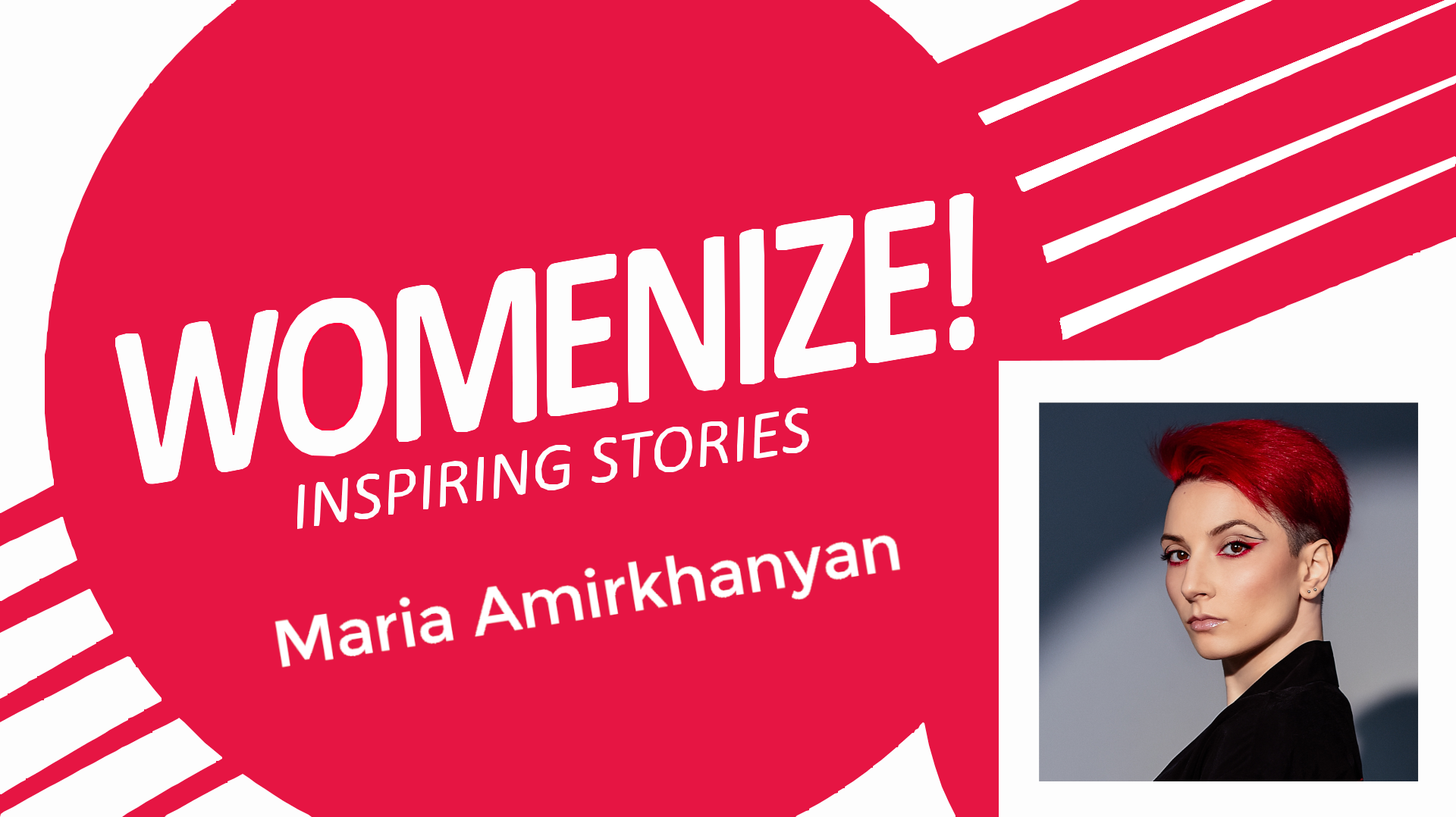
Maria Amirkhanyan, Player Behavior and Product Growth Strategist transformed psychology into a strategic tool for game studios. In our interview, we also explore, why sustainable player trust matters more than short-term metrics, and how “mastery under pressure” shapes her leadership in the high-stakes world of game development.
Hi Maria! You started in psychology and academia, and today you’re shaping strategic decisions for some of the biggest game companies in the world. What motivated you to turn player psychology into a leadership and business tool and what challenges did you overcome along the way?
I started in psychology because I was always fascinated by one question: why do people do what they do, especially when the answer is not obvious even to them.
In games, this question becomes incredibly powerful. A player may say, “I don’t like this feature” but underneath that reaction there can be confusion, loss of agency, broken expectations, lack of trust, or simply a reward that does not feel valuable enough. When you understand that layer, psychology stops being abstract, it becomes a business tool. It helps teams protect budgets, reduce decision risk, improve retention, and make better product decisions before the cost of being wrong becomes too high.
The challenge was that I had to translate between worlds. Academia teaches you depth, precision, and evidence. Business needs speed, clarity and decisions. Game teams need recommendations they can actually use. So I had to learn how to take cognitive science & research, and turn it into something that helps an executive producer, a game designer, or a monetization lead make a better call today.
Another challenge was proving that player psychology is not “soft”, it is not a nice-to-have. It directly affects retention, revenue, trust, and whether players come back tomorrow. For me, the motivation was to bring the player’s mind into the room where strategic decisions are made, not as an opinion, but as hard evidence.
Your work is deeply focused on both growth and player trust. In an industry often driven by short-term metrics, how do you personally define “responsible” success in games?
For me, responsible success means growth that doesn’t destroy the reason players came to the game in the first place.
It is easy to chase short-term ARPU wins, but it is much harder to ask: what happens to trust after that? What happens to long-term motivation? What happens to the cohort two weeks, 30 days, or 3+ months later? If monetization works today but quietly damages retention, community sentiment, or the player’s sense of fairness, I don’t see that as success, it’s a borrowing from the future.
Responsible success is when the business grows because players understand the value, feel respected, and want to continue. Of course, it doesn’t mean being afraid of monetization. Games are businesses and teams need revenue to survive. But monetization has to work with player motivation, not against it.
The best outcomes happen when growth, design and trust are not treated as separate conversations. A strong product decision should answer all three: does it move the business, does it make sense for the player, does it strengthen the long-term relationship between them?
That is the kind of success I care about – not just a spike on a dashboard, but a game that can keep earning attention, time, and trust.
You’ve described MMA and souls-like speedrunning as training for “mastery under pressure.” How has that mindset influenced the way you lead teams and make difficult decisions?
MMA (mixed martial arts) and souls-like games (challenging action games built around precise combat, difficult enemies, repeated failure, and learning through mastery) both teach you something very simple and very uncomfortable: pressure doesn’t create your skills, it reveals them.
In MMA, if you panic, you lose structure. In a souls-like game, if you rush, you die. You have to stay calm when something is attacking you, read the pattern, make a decision and accept that you may need to try again. That mindset has influenced my work a lot.
In business and game development, pressure is everywhere and, in the current state of the gaming industry, the pressure is much more intense than ever. A launch is coming. Retention is dropping. The team disagrees. A feature is late. Monetization is not moving. In those moments, the worst thing you can do is react emotionally to the loudest signal. You need to slow down enough to see what is actually happening.
For me, “mastery under pressure” means staying precise when the stakes are high. It means separating signal from noise. It means asking better questions before making expensive decisions. It also means being honest when something isn’t working, even if a lot of time, budget, or even ego has already gone into it.
I think good leadership is not about never feeling pressure. Of course you feel it. It is about not letting pressure make the decision for you. You stay calm, you look at the evidence, you protect the team from chaos, and you choose the option that has the best chance to compound over time.
Womenize! – Inspiring Stories Feature by Madeleine Egger

