
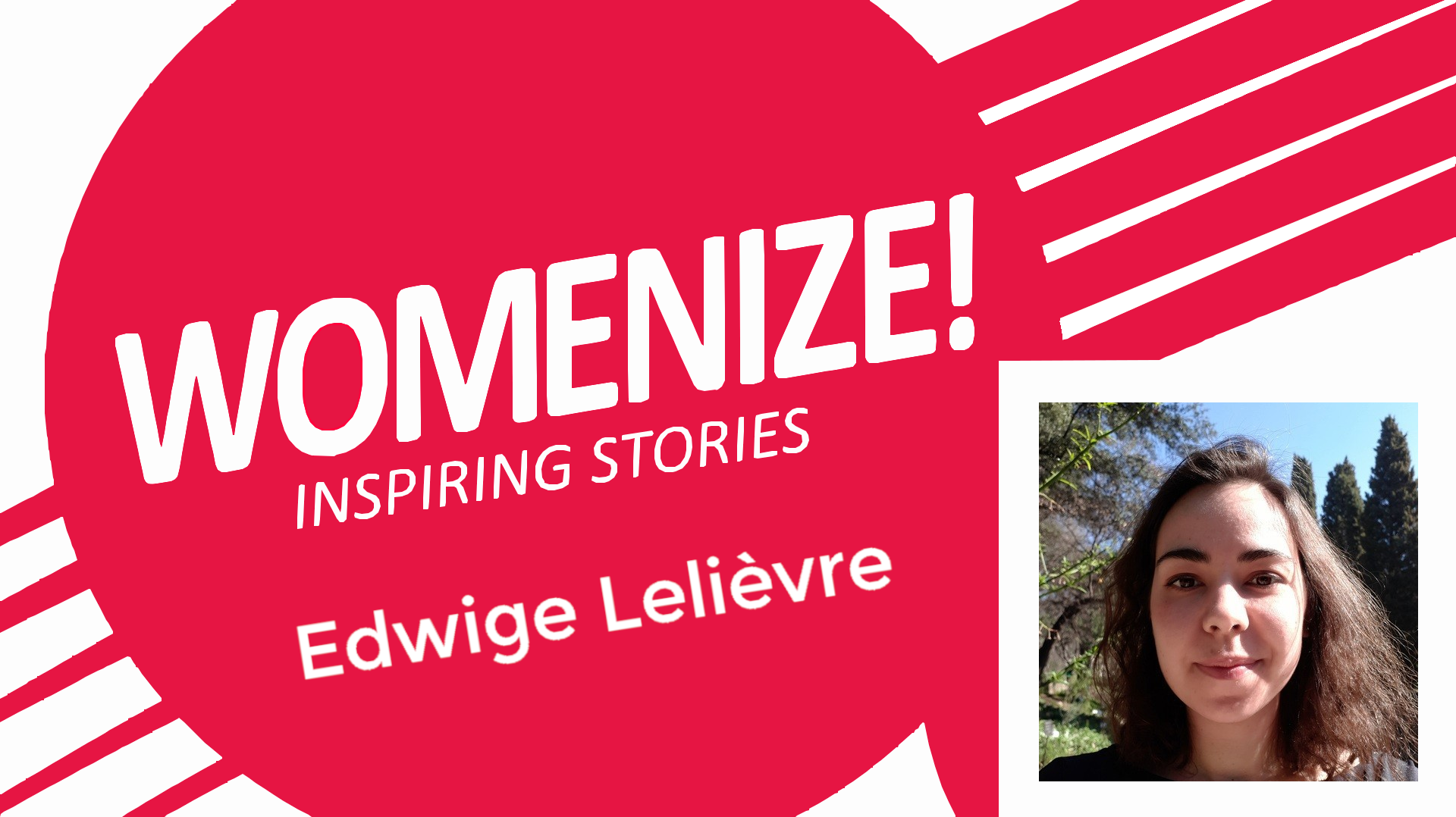
Edwige Lelièvre, CEO & Lead Programmer at MD Studio works at the intersection of game development, research, and knowledge sharing. She believes that games can make cultural, historical, and ecological subjects accessible while fostering broader perspectives.
Hi Edwige! Your career moves between academia, research, and game studios often that of a practitioner and that of a researcher.
Looking back, how has this constant crossing between “knowing” and “making” shaped the way you understand what games can do especially when they engage with cultural or natural heritage?
At the university, I was trained with the research-creation methodology, so for me, creating has always been a solid way both to expand my knowledge and to share it. Video game is a craft and an art, so being part of the creation process provides insight that cannot be obtained by external analysis only.
What is important, though, is to separate creation time and analysis time. The space between these two moments (ideally at least a year) helps for scientific distance but also prevents creation paralysis: if you’re too critical, then it becomes super hard to stay motivated and believe in your work.
Because I was creating my games with natural and cultural heritage in mind, I always worked with other experts (historians, archaeologists, horticulturists…) It’s one part of my work that I value the most! In general, creating video games is well-regarded by these experts, but they don’t necessarily play video games themselves. So it’s very important to make sure they understand what it is about. I also like to invite them to play when it’s possible.
You’ve worked on games that carry strong real-world intent, like Roots of Tomorrow and Tevi, where systems, science, and storytelling intersect. Where do you personally draw the line (if there is one) between creating a meaningful simulation and risking oversimplifying complex ecological or cultural realities?
I indeed like creating simulated nature! I care about making the experience or gardening feel similar, but I’m not trying to reproduce the exact complexity. Real gardening is extremely punishing and difficult, but most gardening players are more into cozy games than Elden Ring or 4X. So I simplify a lot (no pests or bugs for instance), but the plants data are real, and I’m trying to share what I think are gardening pleasures, like the endless exploration of a small place, because it keeps changing and it keeps surprising you.
For instance, in my last gardening game, The Abbess Garden, the plants that require a lot of water (like Iris) in real life, also require a lot of water in-game. Same for the soil and proximity system. What the plants were used for in the 17th century is also true, and verified by a historian. They grow through the seasons, at a normal rhythm (no magic there!)
You couldn’t use the game to simulate plants’s growth for a botanical research program, but I’m trying to design it in a way that will still teach players how to care for the plants and what they could be used for.
As a CEO, lead programmer, and researcher in fields still largely shaped by dominant industry narratives, what kinds of creative or structural decisions do you think are still underexplored when it comes to making space for more diverse voices, not just in who makes games, but in what kinds of knowledge games are allowed to express?
At the moment, I think there is a huge gap between game studies and game development. I hope that by having both hats I could help show in which ways this type of partnership could work.
The collaboration with other scientists, like historians, is particularly fruitful when we involve them a lot in the creation process and not just as consultants with limited access. It takes work, but it’s so rewarding! They are also way more accessible than most people would think. There aren’t that many opportunities for researchers to share their work with a broad audience, so as long as you’re respectful, it’s easy and pleasant.
As we are facing a rise of fascism everywhere, I believe sharing knowledge and expanding worldviews is one of the best things video games could contribute to in the current cultural battle.
Womenize! – Inspiring Stories Feature by Madeleine Egger

