
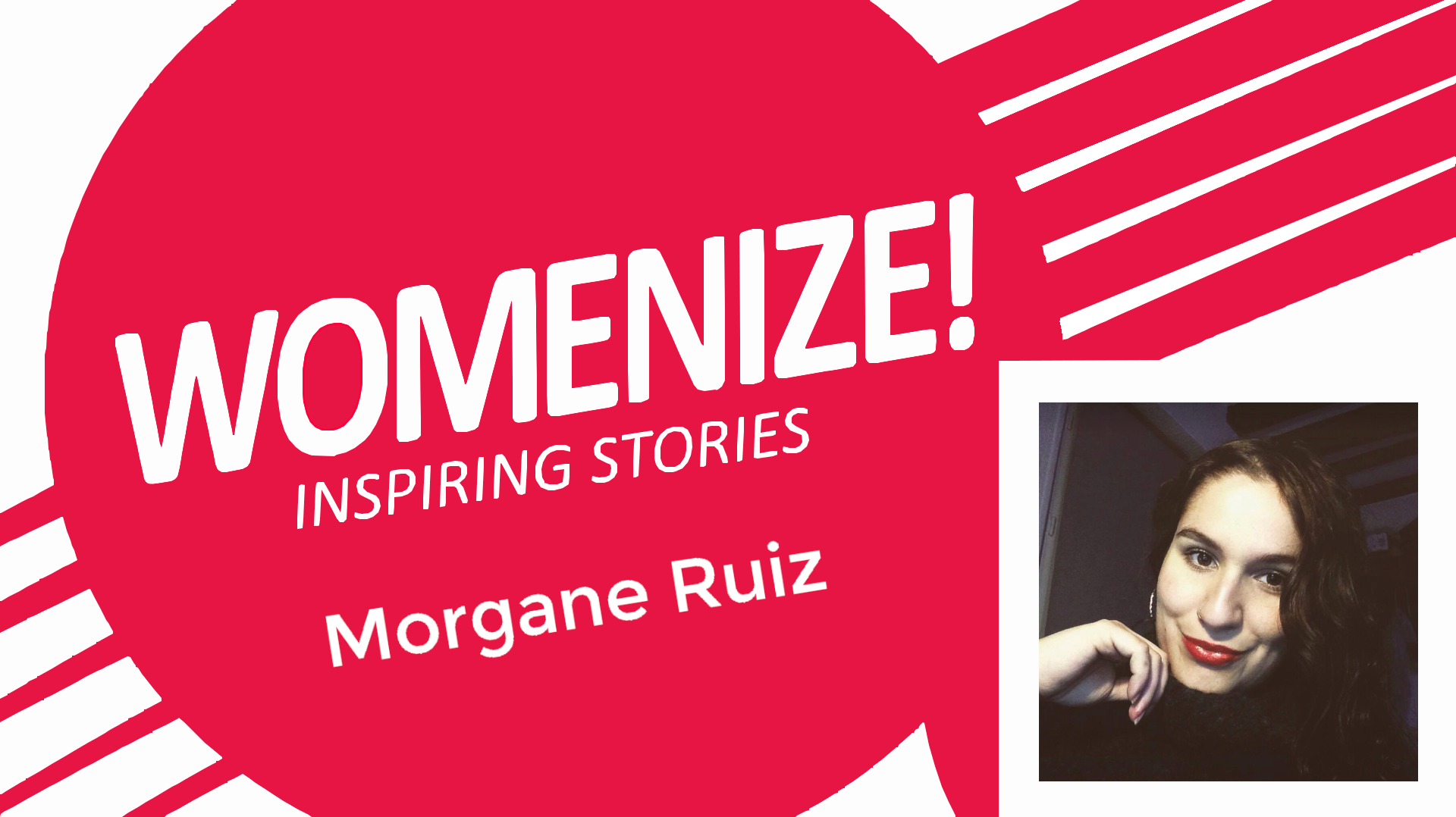
Morgane Ruiz is Lead Games User Researcher at Klang Games. Read on to learn more about her academic background in sociology and anthropology, and how she translates player insights into better design decisions while balancing analytical thinking with her own passion for playing games.
Hi Morgane! Your journey into games comes from a strong academic and research background, moving from humanities into sociology, anthropology, and eventually game user research. When you think back on that journey, were there moments of doubt or unexpected turning points and how has that academic foundation shaped the way you understand players and games today?
Yes, definitely!
I think one of the biggest moments of doubt for me was wondering whether I would be able to translate what I had learned in academia into the pace and constraints of the games industry.
Academic research is often slower while industry research, especially in game development, requires a different rhythm: you need to be adaptable, pragmatic, and able to provide clear insights that teams can act on quickly.
In my work, I often remind myself and the teams I collaborate with that we are not doing fundamental research in the academic sense. In Game User Research, the goal is not to apply a method for its own sake, but to understand what the team needs to decide, what risks they need to reduce, and what players are actually experiencing. The method has to serve the game, the players,
and the production context!
At the same time, I do not regret my academic background at all. In fact, it has shaped the way I approach games and players in a very meaningful way as it gave me a broader research toolbox. It taught me to look at games not only through usability or comprehension, although those are absolutely essential, but also through meaning, motivation, player culture, social dynamics, identity, systems, and interpretation etc.
I think this is increasingly important because games are becoming more complex, and players are becoming more demanding and diverse in the way they engage with them. So Iʼd say that my academic background helps me approach players with curiosity and nuance, while my industry experience helps me turn that understanding into practical recommendations for design, product,
and development teams! For me, good Game User Research sits exactly at that intersection: rigorous enough to respect the complexity of players, but practical enough to help teams build better games.
Game user research is still a relatively unknown discipline outside the industry, even though it has a huge impact on how games are built. What does a typical day in your role as Lead User Researcher look like at Klang Games? From planning studies to observing players, what does your work rhythm actually involve, and where do you feel your impact most directly?
One of the things I love about Game User Research is that there is rarely a truly “typicalˮ day.
The work changes depending on where the game is in development, what the team is currently trying to understand, and which decisions need to be supported quickly.
A lot of my work starts with conversations. Before choosing a method or running a study, I spend time with designers, product stakeholders, developers, community, analytics, and leadership to
understand what they are trying to learn. What decision are they facing? What player behavior are they unsure about? What design risk are they trying to reduce? What do we already know from existing data, and what do we still need to investigate? These are our daily questions!
From there, I translate those questions into a research approach. That can mean planning and running playtests, surveys, diary studies, interviews, expert reviews etc. It also means observingplayers carefully, looking not only at what they say, but what they do, where they hesitate, where they misunderstand something, where they feel frustrated, and where the experience starts to click.
Because I work on a live game, there is also a strong rhythm of continuous learning. We regularly have player feedback, behavioral signals, community sentiment, and internal questions coming in.
Part of my role is to connect these different sources of insight and turn them into something clear and usable for the team. It is not just about reporting what players said, but helping the team understand what it means for the game and what they can do next.
But the place where I feel my impact most directly is when research helps a team make a better design decision. For example, when designers take player feedback into account, adjust a feature, improve onboarding, clarify a system, or reduce friction in the experience, you can really see the value of research. It is very rewarding to see insights move from observation, to recommendation, to implementation, and finally to a better player experience!
After so much time observing and analyzing players, do you ever find yourself thinking differently when you play games personally? Has it changed your relationship to being a player yourself?
Yes, absolutely! And I think this is both the blessing and the curse of being a Game User Researcher. Once you spend so much time observing players, identifying usability issues, analyzing friction, and understanding where an experience breaks down, it becomes very difficult to fully “switch offˮ that part of your brain when you play games yourself!
Hereʼs an example: when I play a new game, I often catch myself analyzing its structure, instead of simply experiencing it as a player. It has made me much more aware of how much invisible work goes into making a game feel intuitive, satisfying, and emotionally engaging.
At the same time, this is also a very important reminder as a researcher: I am not the player. My own reactions, expectations, and expertise are not a substitute for real player observation. Being aware of that bias is essential. It keeps me humble, and it reminds me why Game User Research matters in the first place.
But some games really made me forget all of that. They pull me completely into the experience, and I stop analyzing because I am simply playing. I recently felt this with Kingdom Come: Deliverance II: the flow was incredible, and I completely lost track of time.
In those moments, I genuinely feel that studying games and player experience was one of the best decisions I have ever made. Games are an endless source of research, creativity, and discovery, and I feel very privileged to work in a field where my job is to understand how players experience them while working with very creative people!
Thanks for this interview, Morgane!
Morgane’s links: LinkedIn
Womenize! – Inspiring Stories Feature by Madeleine Egger

