
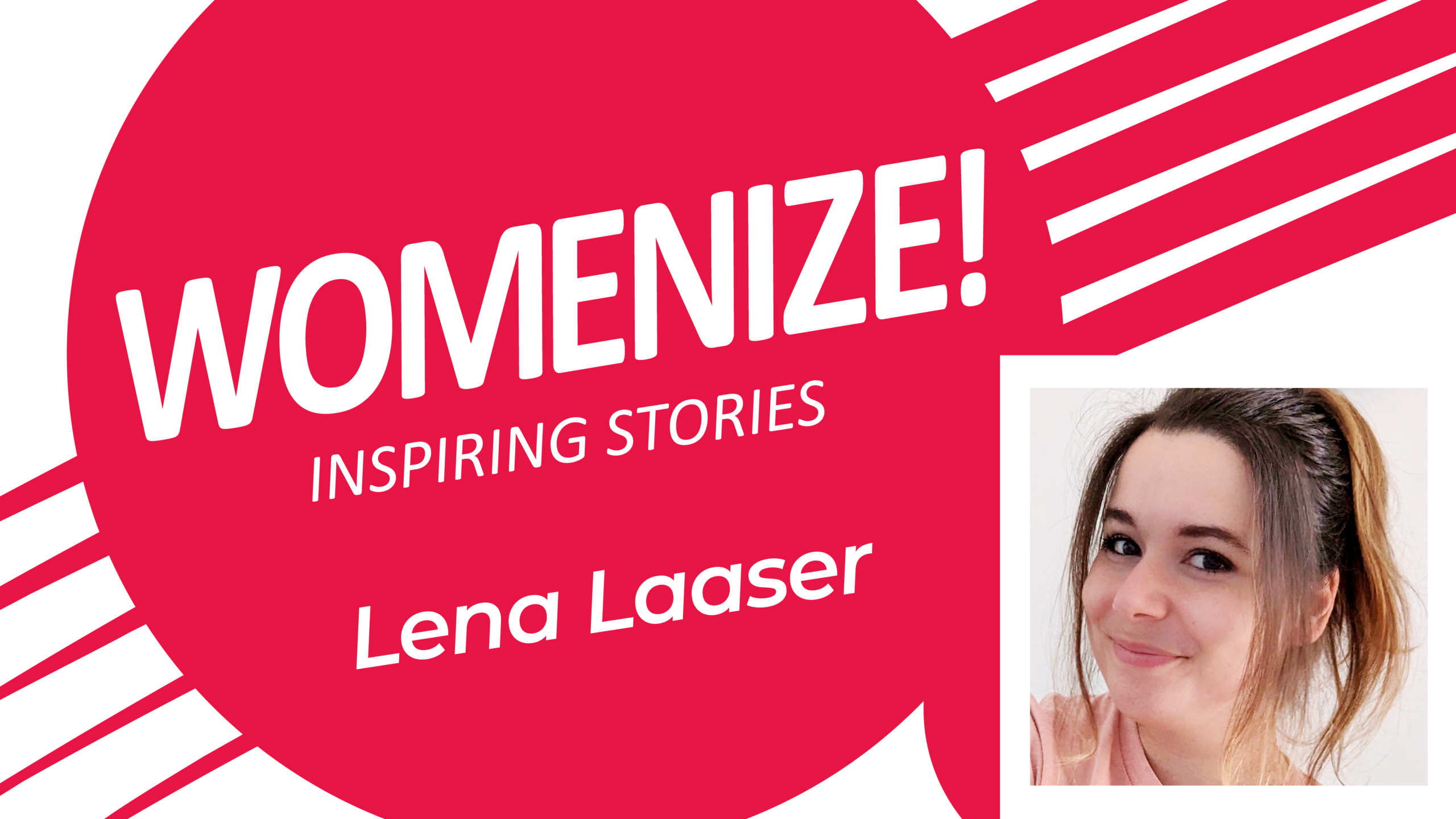
From challenging sexism and shaping safer spaces to building stronger connections between the games industry and social causes – our interview with Lena Laaser, CEO of good shift and Co-Founder of GAME:IN explores what it takes to turn personal values into meaningful change.
Looking back at your journey through the games industry (from Ubisoft and Twitch to leading Friendly Fire, co-founding GAME:IN and now founding good shift), when did you realize that you weren’t just working in the games industry, but actively shaping it? And as you begin this new chapter with good shift, how do you hope to shape what comes next?
To be honest, I’ve never really thought about it that consciously before. Personally, I like having a sense of purpose, and I find it difficult to accept injustice. So I try to make a difference wherever I can. And that scope becomes much greater when you join forces with other people.
The first time I consciously realized that we could actually create positive change was through the safer-space policies at industry events. In the beginning, it was often more about telling people to “behave themselves.” Now, more and more events are explicitly addressing specific forms of misconduct and outlining possible consequences. Through GAME:IN, we helped drive this development forward. At the same time, we are receiving fewer reports now, although of course it is impossible to say with certainty whether that is directly related.
With good shift, I want to continue this work, but on a different level. I want to bring more social engagement into the games industry while also helping to further develop games events. Above all, I want to create stronger connections between the community, the industry, ngo’s and social issues. The games industry has enormous reach and communities that are passionate about a wide range of topics. I want to help harness that potential more effectively for socially relevant projects while creating events that offer real value to both the community and the industry.
Your career seems to be driven by a willingness to take responsibility for projects, communities and issues you care about. What have been the biggest challenges along the way, and what have they taught you about the kind of leader and person you want to be?
At the beginning, I felt like I had to put an incredible amount of energy into simply being taken seriously. I was lucky to meet some great people early on who believed in me, supported me and encouraged me to keep going. That experience taught me very early how important it is to have people around you who believe in what you are doing.
It also shaped the way I want to work with other people. I genuinely enjoy supporting others and giving them the space to shine. I don’t think good leadership is about always being the loudest person in the room or having all the answers. For me, it is much more about bringing people together, recognizing their strengths and creating an environment where everyone can contribute. Some of the best things I have been part of happened because a group of people brought different perspectives and skills together to create something that none of us could have achieved alone.
Another challenge has been finding the balance between pushing for progress and knowing when pushing too hard can actually make things more difficult. Sometimes, if you push a door too hard, it closes completely. That can be incredibly frustrating, especially when you care deeply about an issue. But I have learned that being persistent does not always mean being forceful. Sometimes slow and steady progress is more effective than pushing for immediate change and getting nowhere.
One of the greatest privileges of my work is that I get to collaborate with incredibly passionate people, both in NGOs and across the games industry. I find it really inspiring to hear why someone cares so much about a particular issue or project. I hope I can keep that curiosity, keep learning from the people around me and create spaces where other people can do their best work, while still having the courage to stand up for the values that matter to me.
That is probably the kind of leader and person I want to be: someone who brings people together, makes others stronger and is willing to keep pushing for change without losing sight of the people along the way.
You co-founded GAME:IN out of a desire to actively challenge sexism in the games industry. In 2025, that work was recognized with the Special Jury Award at the Deutscher Computerspielpreis. What has the journey with GAME:IN from starting the initiative to receiving that kind of recognition taught you about creating meaningful change?
It all started with an angry Discord call among friends. We were asking ourselves why it seemed so difficult to genuinely support marginalized groups instead of simply waving at a camera for a bit of pinkwashing.
At the beginning, we were in a relatively privileged position. We had established jobs at companies that shared many of our values, and we could speak up about these issues without necessarily facing the same risks or consequences as people who are more directly affected by discrimination. At the same time, we were not outside these structures ourselves: as women, we had also experienced sexism, just in different ways and often from a position that gave us more protection and visibility than others. We became very aware of that privilege and felt that it also came with a responsibility to use our voices and our positions to create change.
From the beginning, it was important to us not just to criticize, but to actively offer solutions and make it harder to hide behind excuses. That is why one of our first steps was launching our speaker database, making it easier for organizers to find diverse voices for their events.
We received a lot of support and were given a great deal of trust early on. We tried to use that input to develop practical measures, such as our safer-space policy, and to organize panel talk events that bring important conversations about diversity and inclusion into the industry. Separately, we also created networking events to provide a safer environment for people to connect. With our manifesto, we are also trying to make companies that actively work towards a better culture more visible.
I think that journey has taught me that meaningful change often starts with solving smaller, concrete problems rather than trying to fix everything at once. You need people who are willing to speak up, but you also need people who are willing to listen, take responsibility and actually implement something.
Receiving the Special Jury Award at the Deutscher Computerspielpreis was, of course, an incredibly meaningful moment for all of us. It was a wonderful recognition of the work we had put in over the years. At the same time, our acceptance speech was deliberately a little critical. We pointed out that even in a room celebrating the industry, there could be people who had experienced or perpetrated abuse of power. That led to some backlash, which was difficult, but it also reinforced something we strongly believe in: just because you personally have not experienced or witnessed a problem does not mean it does not exist.
Honestly, we would all prefer not to be needed. Creating a safer and better environment is something the whole industry has a responsibility for. We cannot do that alone. It means speaking up for others, supporting people who come forward, and being willing to question behaviour and statements even when they come from someone we know and like.
For me, that is ultimately what GAME:IN has taught me: meaningful change requires both courage and collective responsibility, and most importantly, it requires us not to look away.
Thank you for this interview, Lena!
Follow Lena Laaser here:

