
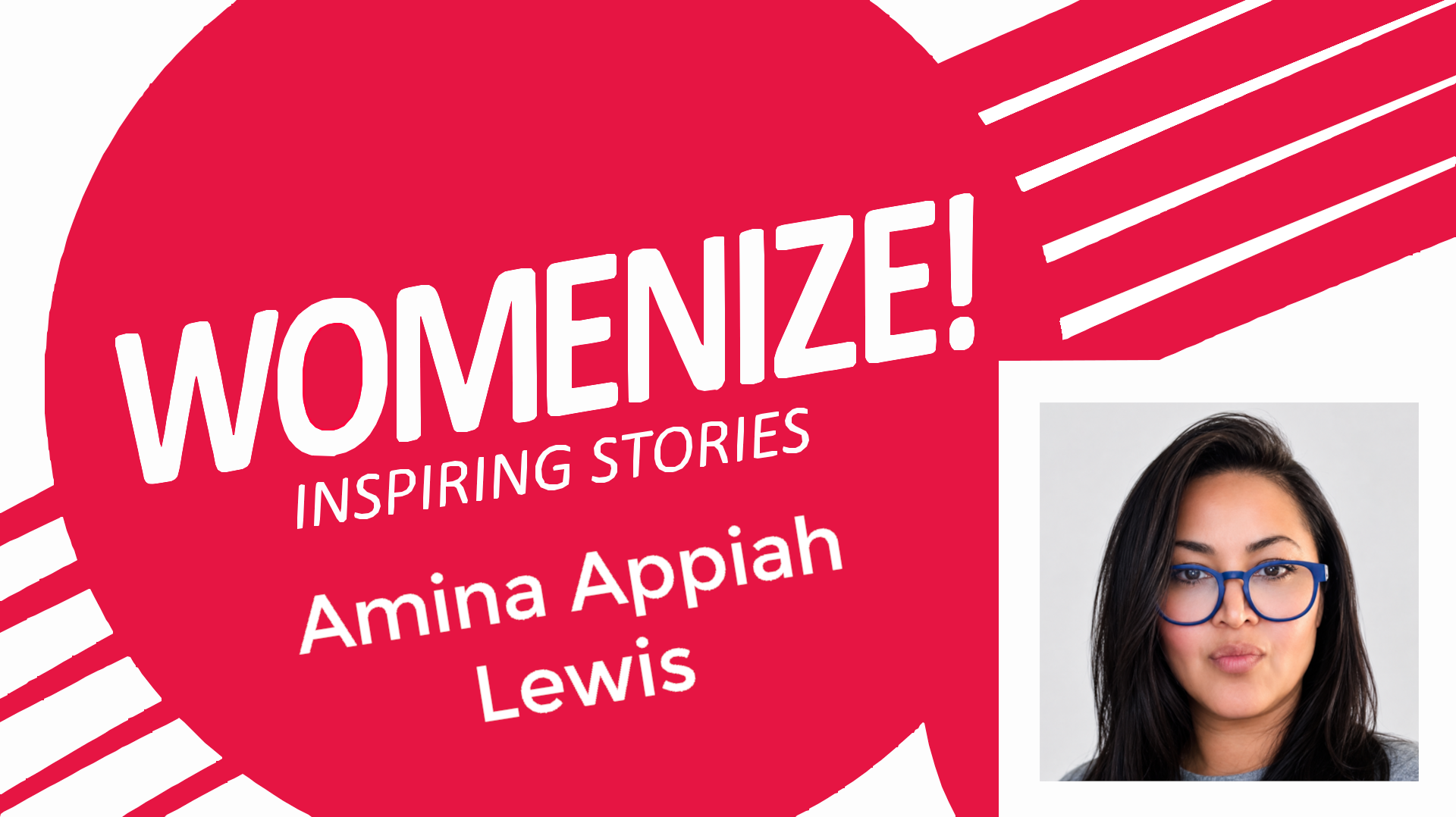
Amina Appiah Lewis – Womenize! – Inspiring Stories
Womenize! – Inspiring Stories is our weekly series featuring inspirational individuals from games and tech. For this edition we talked to Amina Appiah Lewis, Founder & CEO of LiveGuide AI.
She speaks about her journey from an entrepreneurial childhood and career in marketing and telecoms to founding LiveGuide AI, and why she wants more women to see that there’s a place for them in Tech.
Your career started in marketing and telecommunications long before AI became part of our everyday vocabulary. Did you have a clear idea back then of where you wanted your career to go, or has your path been shaped more by opportunities, curiosity and unexpected turns along the way?
To be honest, I always knew what I wanted to do. One of my favourite games as a child was being a business person! I’d sit at my desk and interview my younger siblings for pretend jobs. I even had a little plastic briefcase.
I couldn’t have told you I’d end up building an AI company, but I knew I wanted to run my own business. I chose my A levels for it, and I chose my degree for it. The destination was vague; the direction never was.
My first jobs out of university were at Swiftcall and then First Telecom, when new businesses were opening up the telecoms industry and making international calls affordable. At First Telecom, I learned an enormous amount about running a business. Those years also taught me what I most enjoy: creating products and services, bringing them to market and understanding why people do what they do.
After that came Broadsystem Ventures, a News Corp company, and then I started an international calling card business with university friends, which M&S Ventures bought. Later, we started another business together, which is still going 23 years later and has served more than 16 million people.
More recently, I’ve run my own consultancy, helping companies grow and bring AI into how they work. That’s where LiveGuide began — though it didn’t begin with the technology. It began with my friends and family.
They kept coming to me with the same questions. Should I go back to work? Should I pivot and do something completely different? Where do I even start?
Those aren’t questions you can answer properly in ten minutes over a coffee, so I kept telling them to use AI to figure it out. It had worked brilliantly for me — I’d had a real wow moment with ChatGPT and could see exactly what it was capable of. But the more often I gave that advice, the less comfortable I was with it. What they were getting back was generic. It wasn’t private, and these were not things you want to type into something and then wonder where it goes.
I talked to Mark, my partner and co-founder, who was one of those university friends I’d already built businesses with. With his background as a CTO, he built the platform for LiveGuide while I designed the guides.
Today, LiveGuide provides private, voice-first, multilingual and multicultural AI guidance across health, work and life transitions — more than twenty specialist guides, covering everything from menopause and returning to work to wellbeing, burnout and preparing for a difficult appointment. The guides remember previous conversations, so you don’t have to start from the beginning every time. They help you set goals, send you reminders and work with you towards where you want to be.
LiveGuide is open to anyone, and we’re also live with Menara Health’s app internationally and with Yorkshire Women’s Forum here in the UK — support between the human touchpoints, so people have somewhere to turn between appointments or organised sessions.
I could never have planned every step that brought me here, but I can see how each experience helped prepare me for it.
Your educational background is remarkably broad, spanning business, finance, economics, commercial law, marketing and Spanish. What originally drew you to those subjects, and are there things you learned during your studies that you still find yourself drawing on as a founder today?
It was quite practical, really. I chose a degree with the subjects that would help me understand how a business actually works: finance, economics, commercial law and marketing. I wanted to travel, too, so Spanish was a natural choice.
What I hadn’t quite thought through was how much extra work a language would involve. The year after I left, they made it a full-time sabbatical position, which probably tells you something!
We were booking DJs and bands, selling tickets, managing budgets and dealing with whatever went wrong on the night. That taught me as much as any module. You learn quickly when people have paid for something and expect you to deliver.
I still draw on the commercial subjects every day. You can be discussing funding one minute, an employee’s contract the next, and then explaining a product to someone who simply wants to know whether it will help them. You don’t need to be the expert in everything, but you do need enough understanding to ask sensible questions.
Spanish stayed with me in a different way. Learning another language teaches you that translating the words isn’t always enough. You need to understand what someone means and the cultural context they’re coming from.
I already knew that, if I’m honest, long before I studied it. I’m half Ghanaian and half English, and I’ve spent my whole life moving between the different ways people talk about difficult things — what gets said plainly, what never gets said at all, what advice sounds like when it comes from your own family rather than from a leaflet. Guidance that ignores all of that isn’t really guidance. It’s information in a different accent.
So that has fed directly into how I think about LiveGuide, and why the guides are multilingual and multicultural rather than translated. One of my strengths is making technical things understandable, and I want people to feel comfortable using what we build.
You’ve been a marketing manager, co-founder, director, CMO and consultant, and today you’re building LiveGuide AI as its Founder and CEO. Of all those different chapters, which experiences have shaped you most as a leader, and what have you learned about yourself along the way?
One of the most valuable leadership experiences I’ve had was chairing the PTA at my children’s school. Given the other jobs I’ve done, that might surprise people!
I took a break from full-time work to raise my children, which I’m very grateful for, and got involved at their school as a class volunteer, then parent liaison and eventually chair of the PTA. I was working with women who had run big teams and managed enormous budgets. They were my peers, giving their time voluntarily, and they certainly didn’t need me telling them how to do everything.
I learned to give them room to take ownership, offer support and make sure they had what they needed. They brought all that experience to our events and charitable fundraising, and did brilliant things. It helped ease me back into full-time work and taught me something I still lead by: find people who know their subject, trust them and let them do it.
That willingness to listen matters in what I’m building now, too. We build LiveGuide with communities, learning from the people who will actually use it. I care deeply about people being included and having access to support that makes sense for them.
What I’ve learned about myself has taken a little longer. For years I felt I had something to prove. I pushed harder, worked longer and wanted to be the best in the room. Eventually, I realised how much of that pressure I was putting on myself. I’m still hugely ambitious, but I’m clearer about what I want to achieve and why.
I’m building something epic. My network, my experience and a fair amount of sheer ambition are all going into LiveGuide. I want it to be a major business that makes a real difference to people, and I want that success to buy me the freedom to do more of the charitable work I care about.
I’m proud to be a woman building a technology business. Winning the Brilliant Women in AI Entrepreneurship Award this year mattered to me mostly for what it says about who gets to build this technology, and I want to back other women doing the same. We need more women taking STEM courses, leading tech businesses and having a say in what gets built and who it serves.
There’s also a misconception that you have to be technical to work in tech. You don’t have to be the person writing the code. You do need to understand the technology well enough to see what it can do, work with the people building it and translate it into something useful for ordinary consumers. That’s what I bring, alongside my commercial experience — and it’s why I want more women to see a place for themselves here, including those whose route in looks nothing like the obvious one.
For me, that has meant learning to put myself out there fully. Speaking on a stage, meeting investors and standing behind what you’re building can feel exposing, especially when people can see how much it matters to you. But I’ve learned that I can handle more than I give myself credit for.
“She said yes” has become a bit of a motto. My advice would be to say yes before you feel completely ready. Speak on that stage, meet those investors, put yourself out there and back yourself. You’ll discover you’re capable of more than you think.
And most of all, enjoy the journey. It’s hard work, but it can be so thrilling: seeing your ideas come to life, meeting extraordinary people and doing things you once couldn’t imagine. Don’t be so focused on where you’re going that you forget to enjoy what’s happening along the way.
Thanks for this interview, Amina!
Amina is also on LinkedIn!