
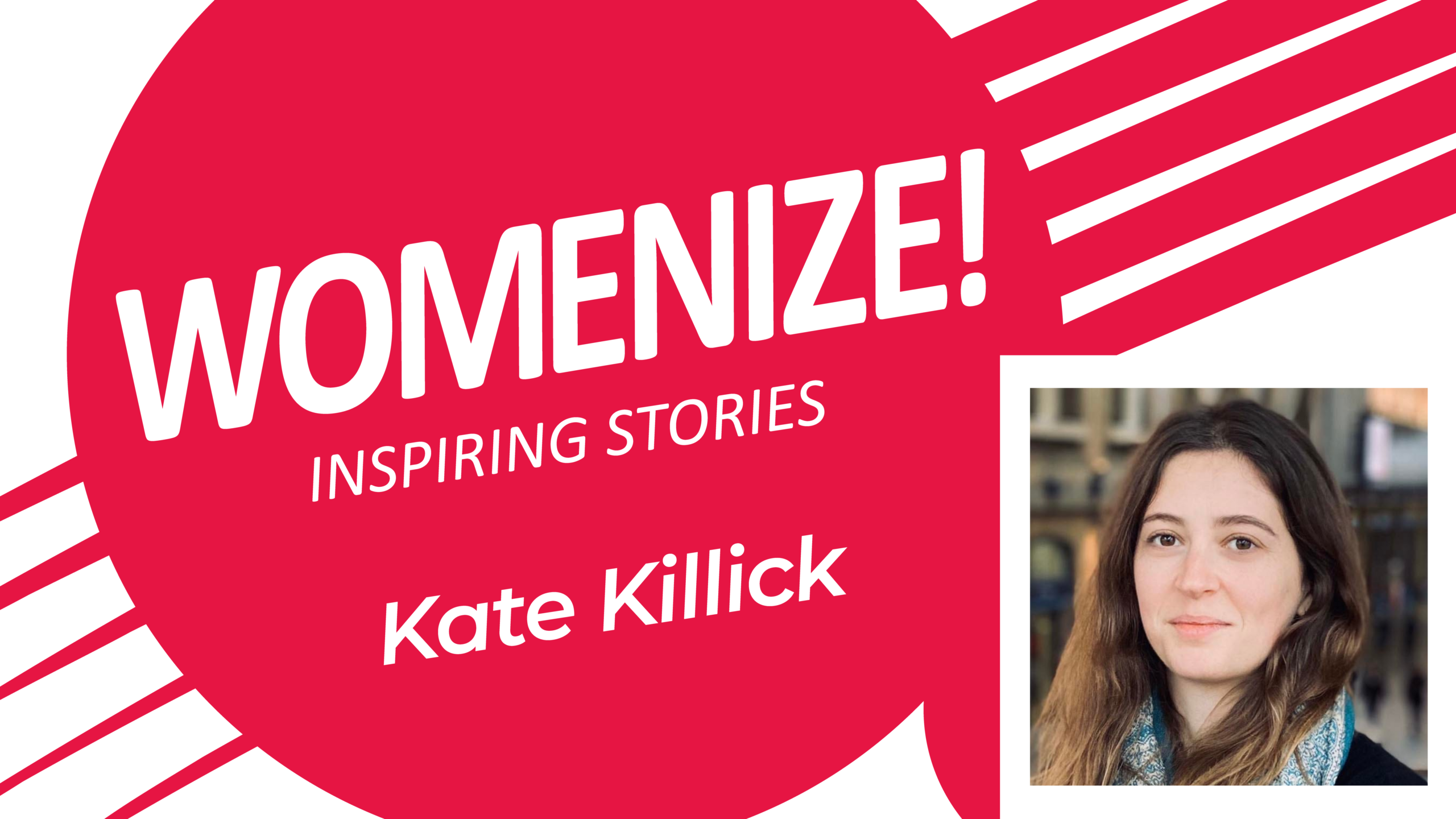
Get inspired by Kate Killick, CEO and Creative Director of Glowfrog Games. In our interview, she speaks about how user testing and sustainable working practices have shaped her approach to game design, the unique potential of games as interactive learning tools, and the need for meaningful financial and leadership opportunities to create a more inclusive games industry.
Your career has taken you from co-creating the BAFTA winning “Mush” and pioneering games on emerging platforms to freelance design and eventually founding Glowfrog Games.
Looking back, which moments or decisions most shaped the kind of game designer and creative leader you are today, and what have you learned about trusting your own creative instincts along the way?
My approach to game design is definitely influenced by the fact that my first couple of full time jobs were UX roles at tech startups. One was designing an app that helps small businesses manage appointments and the other was a platform for young kids to watch TV shows and play educational games. In both cases, I started off understanding nothing at all about these users so I had to quickly learn to throw out assumptions and test everything. I have a similar approach now to game design – I’m constantly thinking about how to get to the next playtest and validate designs with real players.
I think it also taught me not to be too much of a perfectionist. In SaaS startups there’s always the next build to ship and there’s no time to hold on to ideas that aren’t working. It becomes more about weighing up trade-offs than trying to do everything, so I tend to make fast decisions and just see how fast I can explore a creative path.
That said, I think fast-paced environments can burn you out. It definitely happened to me around the time of the pandemic and I’ve become much more conscious about trying to work to my own rhythm. Having my own team now is an opportunity to figure out a better approach. Our goal is to keep making games we care about in an emotionally sustainable way, which is not an easy thing to achieve. You can’t force a constant level of creativity – it’s not healthy and it doesn’t work. People need flexibility to make the most of highly motivated days and then have the space and safety to recharge and get inspired.
A strong thread throughout your work is the idea that games can be more than entertainment, particularly through your focus on educational and children’s games.
What excites you most about designing meaningful experiences for younger players, and what do you think games can uniquely teach or inspire that other forms of media cannot?
I really enjoy making educational games, both for kids and adults. It’s such a unique challenge because you have all these extra constraints as you try to incorporate learning in a way that feels natural. In some ways it’s more satisfying because you can measure how successfully you’re teaching something, whereas trying to tell if your game is just “fun” can feel like a very nebulous goal.
Young kids are great to design for as well because it’s so easy to tell when they’re enjoying the game, and it’s very rewarding to see them light up with joy at a cute character or funny animation.
Games have a lot of potential for helping people learn, not just because they’re entertaining but also because humans just generally learn better by doing. Games are less passive than other media – they can give you space to try things out, to fail safely, and to feel rewarded. They can also more easily adapt to the player, whether that’s focusing on things they keep getting wrong or adjusting a difficulty level, so people can learn in a way that’s more tailored to them than they can with books or TV.
Alongside creating games, you’ve actively worked to make the industry more inclusive, from founding We Make Games and its mentoring programme to your involvement with Women in Games.
From your own experience, what genuinely helps underrepresented people not only enter the games industry but build lasting, fulfilling careers within it, and what change would you most like to see the industry make next?
I’ve been discussing the topic of women in the games industry for over 15 years now. In that time there’s been loads of fantastic initiatives supporting underrepresented people, many of which I’ve benefitted from, from mentoring to conference scholarships and business accelerators. They help people in a lot of ways – they made a big difference in making me feel less alienated, and I’m truly grateful to the people who work so hard to make them happen.
That said, I think support programmes only take you so far, especially once you get to a senior level. We can mentor each other all day long but at some point we actually just need the industry to take us seriously, by which I mean putting women in leadership positions and investing in women-led companies. I would like to see more support for underrepresented people that comes backed with cash, because that is ultimately the biggest blocker for people trying to get projects off the ground, and it’s the hardest thing to do if you aren’t already connected to the right people and invited to the right meetings.
Thank you for this interview, Kate!
Follow Kate Killick here:

