
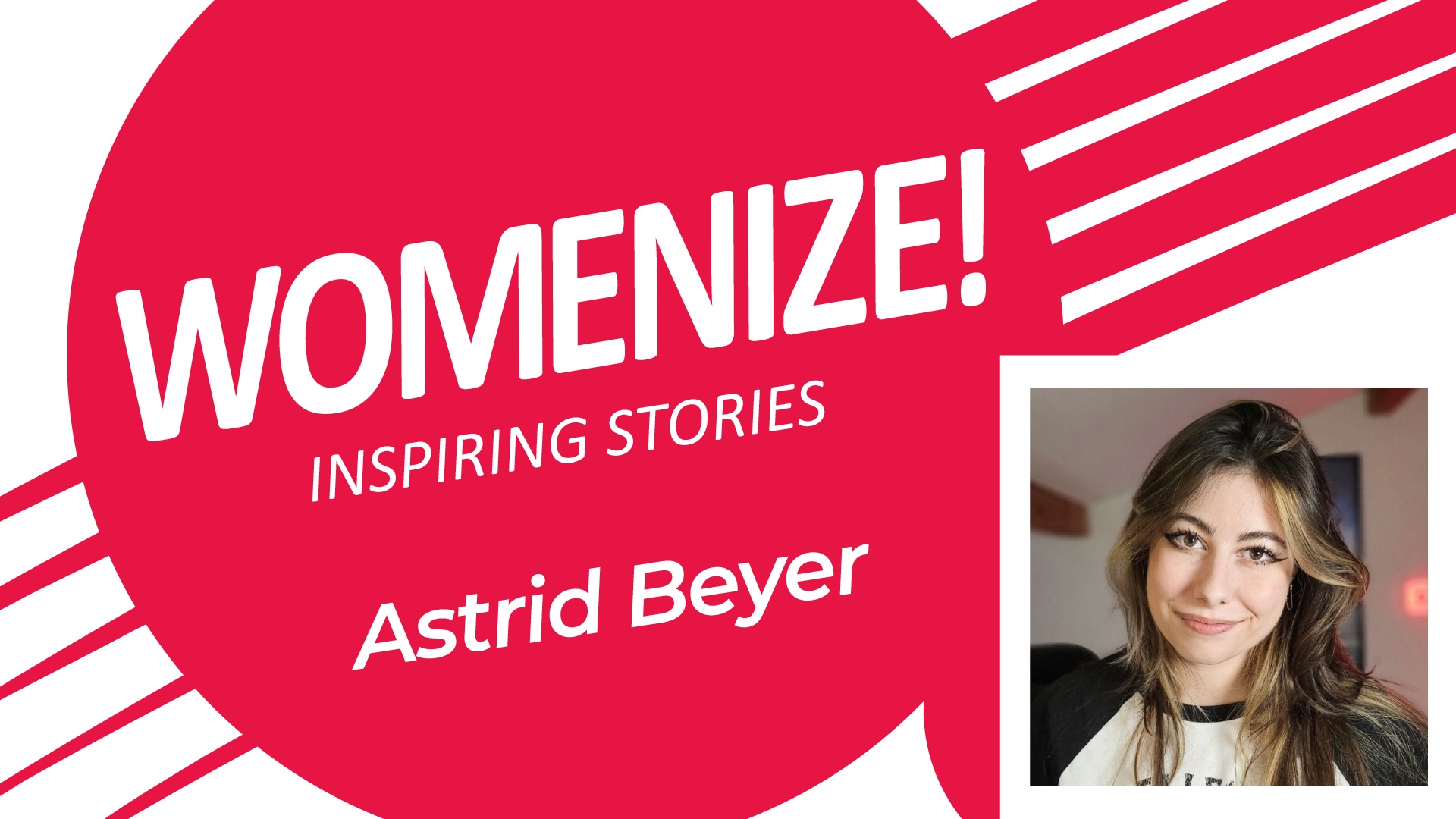
Astrid Beyer, R&D 3D Software Engineer at H3D, bridges technology and creativity – from 3D engineering and medtech to game development and digital art. In this interview, she shares how following her passions has shaped her career, why creative projects strengthen technical skills, and how mentorship and representation can make tech and gaming more inclusive for women.
Your career has taken you through computer graphics research, 3D software engineering, and now the development of tools with real-world applications in medtech, while you continue to explore game development and digital art. Looking back, what experiences or turning points have shaped the path you’ve taken, and how have you learned to trust your own interests when they lead you in unexpected directions?
My interest in 3D actually goes way back, long before I started studying computer science! When I was in middle school, I spent a lot of time on forums and messing around with MikuMikuDance, a 3D animation software. That’s how I discovered the basics of 3D without even realizing it: coordinate systems, bones, rigging, keyframes… all that stuff! I was also really into drawing and graphic design, so I’ve always had a soft spot for digital art.
But I had another big passion: computers and programming. So studying computer science felt like a pretty natural choice. Back in high school, I was already in a technology-focused program, and I happened to be the only girl in my class! I even had the entire girls’ changing room to myself during PE, haha. But honestly, it never really bothered me. I knew I was in a male-dominated environment, but I never questioned whether I belonged there.
My academic journey wasn’t exactly straightforward, though. I really wanted to pursue a Master’s degree, but my math grades weren’t good enough to get into the engineering schools I applied to. So I went to university instead, and looking back, that was probably one of the best things that could have happened to me!
That’s where I discovered a specialization in geometry and computer graphics. Out of all the available paths, this one just clicked. It felt like I’d finally found a field that brought both of my passions together. I started learning about ray tracing, GPU programming with CUDA, 3D geometry algorithms… and that’s when I really started to thrive academically.
Today, my career might look a little all over the place from the outside, between industrial applications, healthcare, and my love for video games. But to me, it all makes sense! Computer graphics are everywhere, not just in entertainment. You can find them in archaeology, medical imaging, industrial simulation, and so many other fields.
For example, I’ve worked on 3D applications for the dental industry, even though I knew pretty much nothing about dentistry when I started. At the end of the day, what I do is all about solving computational geometry problems: processing 3D meshes, developing algorithms, and figuring out technical solutions. The industry changes, but the core skills are still the same.
So I wouldn’t really say I’ve taken unexpected turns in my career. I’ve always followed my interests while staying open to opportunities, even outside the gaming industry. What matters most to me is being able to keep learning, work on interesting challenges, and find a professional environment that works for me. I’ve never felt like I had to choose between my love for tech and digital art. I just found a field where both could come together!
You describe technology and creativity as two sides of your journey, whether you’re building complex 3D solutions for your professional work or bringing your own ideas to life through game development and content creation. How do you balance the technical and creative sides of who you are, and what advice would you give to people who feel they have to choose between being technically skilled and creatively driven?
I think wanting to bring all these different sides of myself together has always been part of who I am. I love being an engineer just as much as I love being a content creator, and I’ve never really seen those two things as separate.
Actually, I think we tend to underestimate how much our hobbies can teach us! For example, streaming helped me become way more comfortable speaking in public, expressing myself, and making other people feel at ease. Those are skills I now use in professional settings, even though I didn’t learn them at school or at work.
That’s also how I see my YouTube channel: as a kind of living portfolio. Through my videos, I get to showcase my technical knowledge by breaking down game development concepts and making them accessible, but also my ability to research topics, interview developers, and connect with industry professionals, sometimes even in English! These are things a traditional CV doesn’t always capture.
My personal game development projects are just as important. They give me the freedom to experiment, learn new technologies, and build a portfolio that actually reflects who I am. I think that’s especially valuable when you’re starting out. If your portfolio only contains the same university projects as everyone else in your class, how are you supposed to stand out?
I also think people sometimes forget that software development is a creative activity in itself. Designing an algorithm, figuring out how to solve a technical problem, experimenting with different approaches… that takes imagination too! It’s actually one of the things I love most about my job.
With AI coding tools becoming more common, the way we work is changing. I use them myself, and I’m learning to adapt, but I think it’s important to stay aware of what we’re delegating. If we automate too much of the problem-solving process, we risk losing some of that creative thinking that makes our work so interesting in the first place. For me, it’s all about finding the right balance between making the most of these tools and continuing to develop our own skills.
Of course, juggling all these activities takes quite a bit of organization! I usually have several projects going on at once, and my days can get pretty packed, but that’s also what keeps me motivated. I love learning, creating, and having things to work towards. I know that pace isn’t for everyone, but personally, I really enjoy it.
So if I had one piece of advice, it would be to never underestimate the value of your passions, even when they seem completely unrelated to your career. Creative projects can teach you technical skills, and hobbies can help you develop people skills you might not even realize you have. You don’t necessarily have to choose between being technical and being creative. Those two sides can actually make each other stronger!
Through your work with Women in Games France and your participation in Ubisoft’s Global Mentoring Program, you’re both advocating for greater diversity in the industry and continuing to grow as a developer yourself. What have these experiences taught you about the importance of mentorship and representation, and what would you like to see change so that more women feel empowered to pursue careers in technology and game development?
I think representation really matters. It’s hard to picture yourself working in an industry or pursuing a career when you don’t see anyone you can relate to. Having female role models, especially in technical fields, can help young women consider career paths they might not have thought about otherwise.
I also think mentorship initiatives are incredibly valuable, especially for people trying to get their foot in the door. Being able to connect with experienced professionals, learn from them, and start building your own network can make a real difference. That’s something I particularly appreciate about programs like Ubisoft’s.
Personally, I’ve never really questioned whether I belong in tech, but I know that’s not everyone’s experience. I’d love to see more diverse women’s career paths being highlighted, and more opportunities like these becoming accessible and visible. Ideally, I’d like young women to see careers in tech and game development as completely natural options, without ever feeling like they need to justify their place there.
Thank you for this interview, Astrid!
Follow Astrid Beyer here:

