
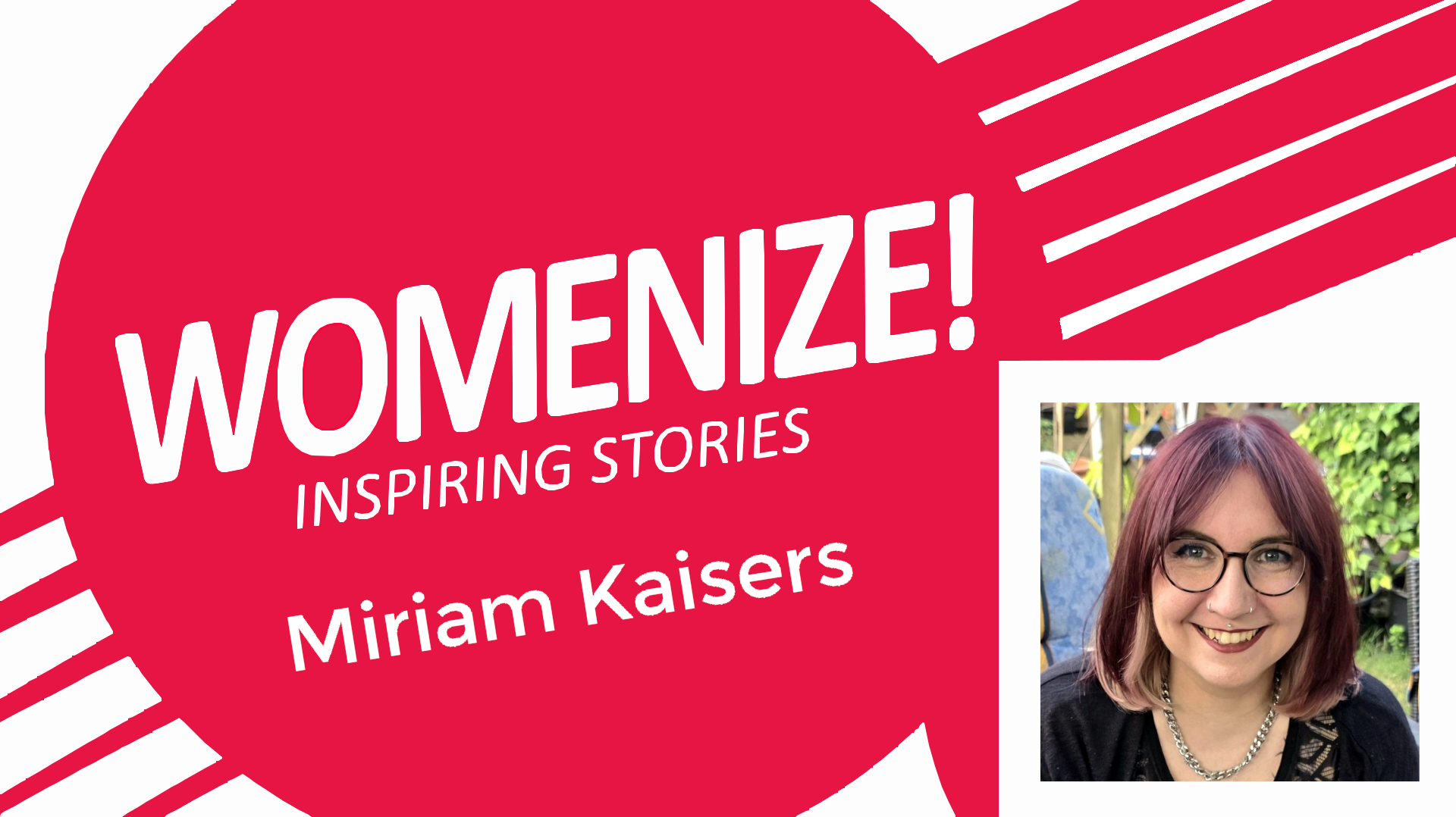
Miriam Kaisers talks about her journey from student assistant to now being a Producer at astragon – and about the challenges that shaped her, and why great game production is ultimately about connecting people, solving problems, and growing together.
Hi Miriam! You’ve been part of astragon for almost ten years, growing from a student assistant to Producer. Looking back, which experience or challenge shaped you the most on your journey and helped you grow professionally (and personally)?
That is a very interesting question. Looking back, I would say that many experiences have shaped me. What stands out most, however, are the many “firsts” and all those moments when I was thrown in at the deep end.
When I look back on my journey today, I still find it fascinating to see how it all began. When I first joined astragon as a temporary assistant and intern, I never imagined that one day I would be responsible for entire projects as a Producer. In hindsight, this has shown me how every experience, no matter how small it may seem at first, prepares you for the next step. It might be something seemingly minor, such as your first independent task or your first meeting, but it can also be a major milestone, like taking responsibility for an entire project.
Even though these situations often feel overwhelming at first, they are exactly the experiences that help you grow. The same applies to difficult projects or challenging team dynamics. A former manager once told me: “Straightforward projects that run smoothly may be pleasant, but they are not the ones that truly help you grow.” Today, I could not agree more.
Often, you do not even notice your own growth at the time. Instead, it becomes apparent in small moments: When tasks that once seemed daunting suddenly feel natural, or when colleagues come to you with questions and problems because they trust you.
Above all, however, it was the team at astragon that accompanied, supported, and shaped me throughout this journey. A strong, well-functioning team gives you a sense of security and creates the space you need to develop. Without that support, I certainly would not be where I am today.
Ultimately, challenges are, above all else, opportunities to grow.
With a background in Game Design and Media Producing, and experience across product management, QA, and production, you have seen game development from many different perspectives. How has this shaped the way you approach creating games and working with teams?
The experience I have gained across these different areas has shaped me into the Producer I am today. These different perspectives have not only given me a better overall understanding of game development, but also help me put myself in other people’s shoes and act as a bridge between teams and between internal and external partners.
During my studies, I had the opportunity to support small projects from the very beginning and actively contribute to their development. This allowed me to experience the needs of programmers, artists, and many other disciplines first-hand: From the frustration of dealing with bugs that cannot be reproduced to the necessity of setting clear priorities.
My time on the publishing side added further perspectives. Marketing activities, featuring opportunities, business decisions, and deals often have a much greater impact on planning than you might initially expect. At the same time, you learn about the responsibility you have towards the community.
I also benefit from these experiences when reviewing milestones today. I deliberately try to look at a product from as many perspectives as possible and find ways to bring the different requirements together. An important part of my work is therefore translating between different disciplines and ensuring that everyone is speaking the same language.
One of the most important lessons I have learned is that just because the development team, the publisher, or you personally like something does not necessarily mean it will resonate with the broader player base. That is precisely why playtests and closed betas are so valuable.
From your first steps as a student assistant to producing games today: what does your role look like behind the scenes, and what advice would you give someone who hopes to take a similar journey?
If I had to describe my role in just a few words, they would probably be: problem-solver, conflict manager, spokesperson, and mediator.
As a Producer, you are responsible for ensuring that a project is released on time, within budget, and at the agreed level of quality. And that the end result is a game that is fun to play. This requires not only maintaining an overview of the entire project and developing a good sense of how the game is progressing, but also working with the team to realistically assess what can be achieved within the available time.
Unfortunately, this also means making difficult decisions. Features sometimes have to be reconsidered, plans adjusted, or priorities reassessed. These decisions might sometimes lead to different perspectives and discussions, whether with internal stakeholders or with the development teams.
From the outside, the role can therefore sometimes appear frustrating, because you are often the first person to deal with problems. At the same time, you may not see the true outcome of your work until several years later, when the game is finally released. Only then does everything the team has worked on together become fully visible.
That is why trust, empathy, and strong collaboration with the team are essential to me. Explaining decisions transparently, acting with a solution-oriented mindset, and understanding other people’s perspectives are every bit as important to the role as project plans and budgets.
Do not think of yourself solely as a project manager. Think of yourself as someone who connects people, strengthens teams, and removes obstacles, sometimes even before they become visible. Ultimately, the goal is to work together with everyone involved, putting a great deal of passion into creating something that inspires and excites people.
My advice to anyone hoping to follow a similar path is to work on your communication skills, stay organized, keep an eye on the market, and focus on finding solutions rather than dwelling on problems. Mistakes are part of the process. What matters is not avoiding them altogether, but learning from them.
And although the role can be challenging at times, anyone who loves planning, enjoys bringing people together, and takes pleasure in solving complex problems as a team will come to love both this profession and the thrill that comes with it.
Womenize! – Inspiring Stories Feature by Madeleine Egger

