
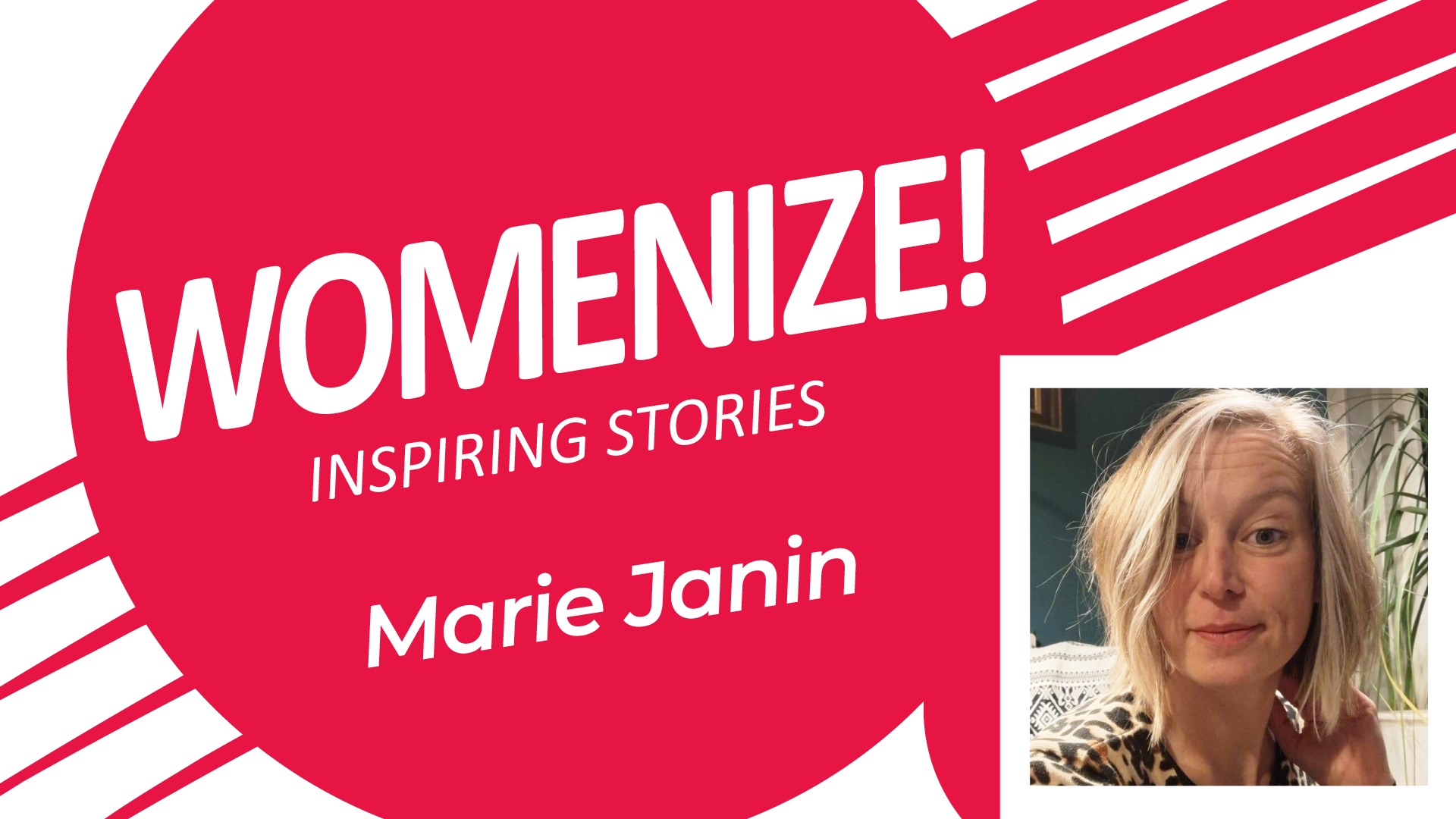
What does it mean to create your own path, challenge established rules and make space for others? Marie Janin, Co-founder and Co-Director of Sickhouse and Curator of The Overkill Festival, reflects on the transformative power of playfulness, the importance of collective care and community, and how embracing experimentation can open up new possibilities for art, leadership and social change.
Your career has evolved from artistic education and production to founding and co-directing Sickhouse and shaping The Overkill Festival. Looking back, was there a moment when you realised you did not have to follow an existing path, but could create a space and a role that reflected your own values and curiosity? What gave you the courage to make that leap?
As an art student, my career path was never completely clear nor fixed. In that sense I always felt that if I wanted to be part of the art world, I had to find the non-traditional places I could work in, discover what kind of people would trust me and maybe create the spaces I could belong to. It took me some time. After my studies I wanted to be an artist myself, I tried different things and at first, the production jobs were more about paying the bills. But then I also started to help organise small events in our studio of artists and it became a more regular practice. I realised I enjoyed bringing people together, creating narratives and developing insightful artistic programs.
As an artist I was working with a very traditional and slow medium and as a producer I was working for events focused on DIY and experimental practices and digital culture. There was a real disconnection between the two and I did not manage to reconcile them. My art practice was also quite lonely and somehow I felt more excited by the collective aspect of the events I was creating. I loved talking to artists, understanding their practice, and supporting their productions… I am not sure I made a conscientious choice to become a curator but somehow my personal life, the opportunities around me and the community that was forming around my events, led me here. Maybe I would not talk about a leap, but more the acceptance of an assumed practice. And the playfulness somewhat grew from there, the DIY, the experiments, the interdisciplinarity of the spaces I was working in.
If I look back I think I grew up in an environment that was very supportive of creativity and truthful choices. I met my partner with whom I work too, quite early in life and I believe we gave each other a lot of confi dence to develop this project. And what also grew around the project of The Overkill and Sickhouse, is a very cool community of caring, engaged and playful people. They made this path possible in some ways by trusting us. They gave me a lot of courage. I think not having a plan allowed me to be open to what was happening around me and flexible in the ways I could be part of it.
Playfulness is at the heart of your work at Sickhouse, even when you are exploring complex questions around technology, identity and society. What has working with play taught you about approaching uncertainty or challenging established ways of thinking? How has that influenced the way you navigate your own life and career?
Playfulness is such a wonderful thing it is hard not to bring it everywhere with you. It is difficult for me not to be excited about it. I think when you play games you take on roles, you search for solutions, you challenge others so of course you develop skills to deal with uncertainties and crises.
I remember a friend told me that for her, playing games had been very important when growing up as she could challenge her parents authority through games and sometimes win against them. And that is the start of many things. This challenging attitude is very inspiring when taking playfulness to business meetings, or into funding applications or even when moving into traditional (art) spaces. Rules are an intrinsic part of playing, so it makes games the perfect media to question them and challenge the ones that make them. In that way it really fits when exploring layered societal questions.
I believe it is also a medium that can be versatile, disruptive and supportive at the same time, so it can help build safe spaces to discuss complex ideas and give space to emotional reactions. I am very touched by the generosity, the vulnerability, the trust I discovered within the community of playful makers and I think this is why I am so excited to work within this field. And this goes beyond my work, I bring this home and in my different engagements.
In 2021 we worked with Nkhensani Mkhari, a South African curator with whom we explored the notion of “Ubuntu” inside playful practices. It really changed my way of thinking about decolonisation as something to share more than a power relationship.
In 2023, together with Kostis Stafylakis and Theo Triantafi llidys, we brought a LARP into The Overkill and this was when I really understood how empowering role play could be when dealing with socio political crises.
In 2024 we worked on the role of playfulness in movements of resistance. We worked with very great artists from around the world, the collective LasTesis from Chili even came to Enschede. Learning from all these joyful practices gave me so much courage to stand with my community in our feminist questions, to fi nd the role we can play to support Palestinian artists, to address issues way beyond play.
I have many examples of how playful encounters changed my life…
Throughout your career, you have supported artists, young talent and interdisciplinary communities, while also working to make diversity more central to cultural organisations. As you have grown into a leadership role, how has your idea of what it means to create space for others changed? What do you hope the next generation of women and creative leaders will feel empowered to do diff erently?
My ideas around space were challenged a lot in the last few years, especially because Sickhouse did not have its own physical space for a couple of years. I also had to think a lot of space is in its multiple shapes and sizes, who gets to have space and how one shares it. A lot of what Sickhouse is, comes from organic development, lucky encounters, hard work of course but the strongest is the people who stick to the playful attitude. So when I think about space, I think about who comes there, who builds it, who needs it, who trusts us with it… So growing in a role of leadership to me really comes from this community, how precious it is and full of responsibilities too. But it also means, the space is not mine, it is ours to take care of and in that way it makes it easy to share.
I always made sure we could move the walls in the space we were creating to welcome the multiple stories, the different needs, the changes. I never want too many things to have a fi xed place, or too many habits to be set, I want walls to move, to change colours, to separate and then disappear. I believe we need to be fl exible to be supportive of the experiment, the world building, the dreaming. And probably this allows the program of Sickhouse to be diverse, the artists to feel they can try different things, the visitors to dare and join the disruptive play.
I wish for the next generation to know that they are not alone and the work pioneer women, queer communities, rebel artists have been doing is present in the games we play, the zines we read, the events we host, in art spaces, in and out of academia and in the streets.
Thank you for this interview, Marie!
Follow Marie Janin here:

