
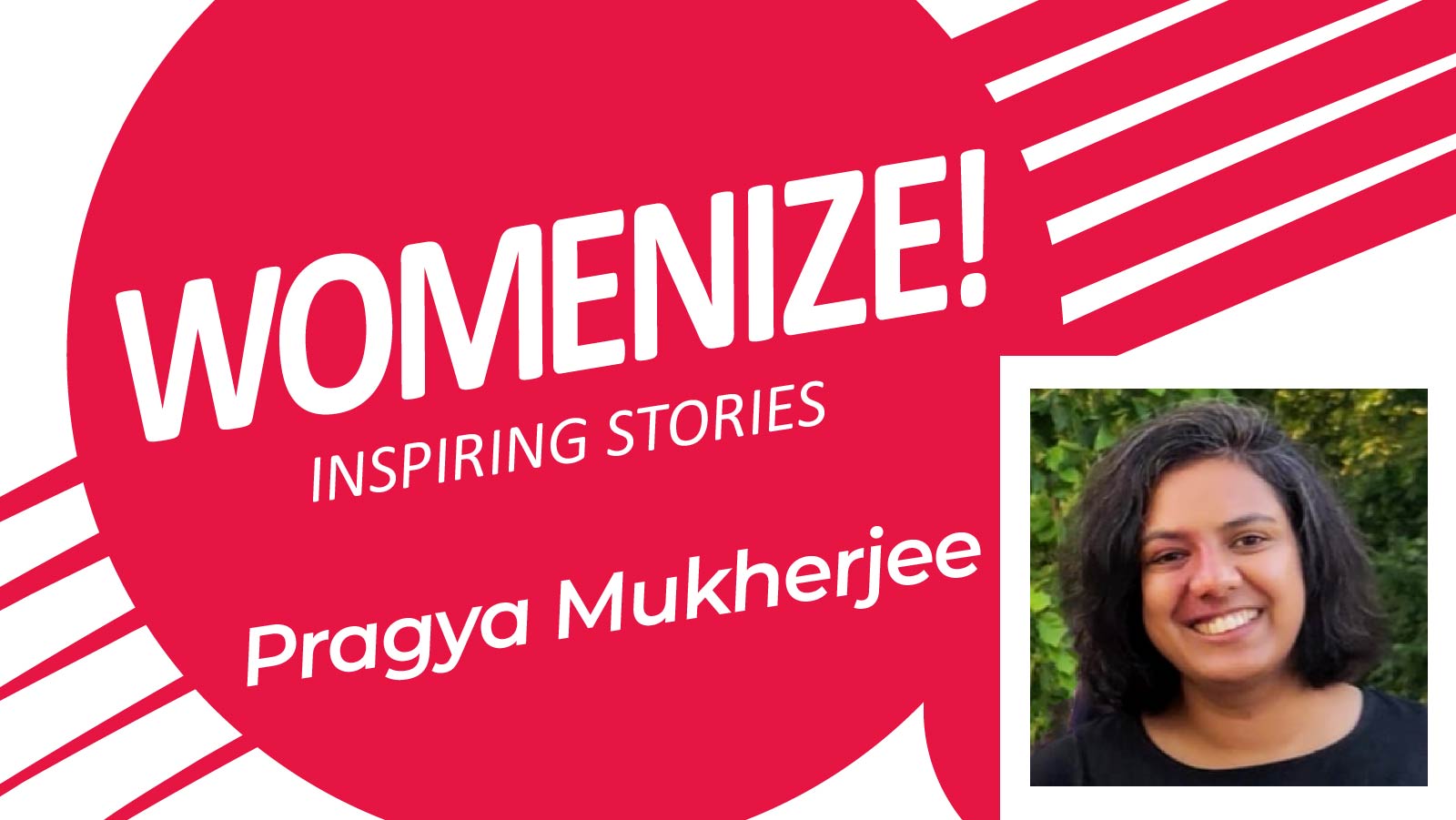
Pragya Mukherjee, Founder and Creative Director of Papercoda Games, discusses the art of interactive and branching narratives, the challenges of giving players meaningful agency, and the inspiration behind “Media Circus” — a satirical game exposing the business, politics and systemic pressures shaping today’s news media.
Your career has taken you from journalism, filmmaking and literature to narrative design and game development. Looking back, how have these different experiences shaped the way you tell stories, and what drew you to games as a medium for exploring ideas and creating meaningful player experiences?
I love stories and have learnt to tell them through various mediums, with games being the latest and most fascinating one. While everything I did before did help me make better games, none of my previous professions could really prepare me to tackle such a different medium that upends a lot of the rules of traditional storytelling and relies on the delightful whimsy of play.
What helped me the most is a lifelong love and passion for games, a willingness to try a vast catalogue of games and interactive experiences – including those outside my comfort zone and niche experimental works, a rich and varied career that taught me to work in and lead teams to complete creative projects and breakdown big amorphous ideas into clear design frameworks and actionable tasks, and, most importantly, never losing a childlike love for play and a deep sense of fun. The ideas for my games are greatly inspired by my experiences and research – “Media Circus” was inspired by the realities of the news industry I witnessed firsthand with all its powers, pressures and pitfalls, as well as the daily bedlam of the print news cycle.
Your research and work explore branching and modular narrative systems, where stories can unfold in different ways depending on the player’s choices. What fascinates you about this approach to storytelling, and how do you balance giving players freedom with creating a coherent and meaningful narrative?
Most traditional storytelling mediums (novels, operas, films, etc.) have well-defined theories and rules of the craft – ways of imparting experiences largely dictated by the physical limitations of the medium. Digital games are a whole new medium for telling stories and crafting experiences with interactivity as its core, and it does away with a lot of the limitations of traditional mediums such as temporality of experience, lack of space or uni-directionality of information. The lack of traditional physical limitations and its interactive, encyclopedic and immersive nature are what make digital games a uniquely fascinating canvas for storytelling and also a particularly challenging one.
For branching and modular narratives in particular there’s the infamous combinatorial explosion problem where each choice and consequence exponentially increases the amount of content to be authored, but drastically culling the choices or consequences to reduce this work betrays the promise of the medium. There are different strategies and frameworks to solve this challenge and I have combined various approaches in my games, but before getting into the technicalities, the first requirement is stop thinking of yourself as an ‘author’ and instead consider yourself more of a narrative ‘architect’ where you create the possibility spaces for your player to inhabit, explore and change. This shift in mindset can be hard for traditional authors used to controlling every aspect of their audience’s experience, but with games we have to give up some authorial control in order to co-create the narratives with the player – anticipating, respecting and rewarding their playful freedoms and ensuring every choice or lack of choice feels like a meaningful experience – leading to narratives that are both authored and emergent, variable yet impactful.
As Janet Murray once predicted, we are witnessing the emergence of a new art form, one that expands our understanding of what stories can be and do, and I for one am very excited to be working on this new frontier.
As the founder and Creative Director of Papercoda Games, you’re developing “Media Circus”, a satirical game inspired by your own experiences in journalism. What motivated you to turn those experiences into a game about the business and politics of news media, and what have you learned from bringing such a personal creative vision to life as an indie studio founder?
I quit working as a reporter and newspaper editor over a decade ago after getting disillusioned by the news industry, and it’s only gotten worse since then. Despite having long quit the industry I kept in touch with ex-colleagues and friends who struggled to do good journalism while their companies were bought by crony billionaires, their resources were cut, their voices censored, their lives threatened and their reportage replaced by ads and PR campaigns. Meanwhile I would hear everyone around me complain about the rampant rise of fake or sensational news and unprincipled journalism, but realised that with everyone pointing fingers at everyone else no one cared to explore the systemic incentives of the news business that made such problems inevitable.
At that point I had been working in the games industry for a few years and had just finished working on our first shipped game, and I realised that a game could convey the realities of the news business and the difficult job of being a newspaper editor in charge of shaping public discourse better than any book or documentary film could – by letting the players embody that role and make the decisions themselves within the incentive structures of a news media business in a free market democracy. This idea grew and grew and was realised with the help of a lot of great people and organisations who threw their weight behind it to create the game “Media Circus” that I continue to work on today.
I founded our studio to be able to make this game, and it certainly helps to have a strong vision and motivation to deal with the incredibly difficult challenges of running a company, but for future projects and other would-be studio founders I would advise a more pragmatic approach and tell them to start with a market need rather than a dream game, because the incentives of the games industry to make a quick profit can also run counter to the idealistic visions of its creatives. We can only hope the consequences for society are not as dire as with the news industry.
Thank you for this interview, Pragya!
Follow Pragya Mukherjee here:

