
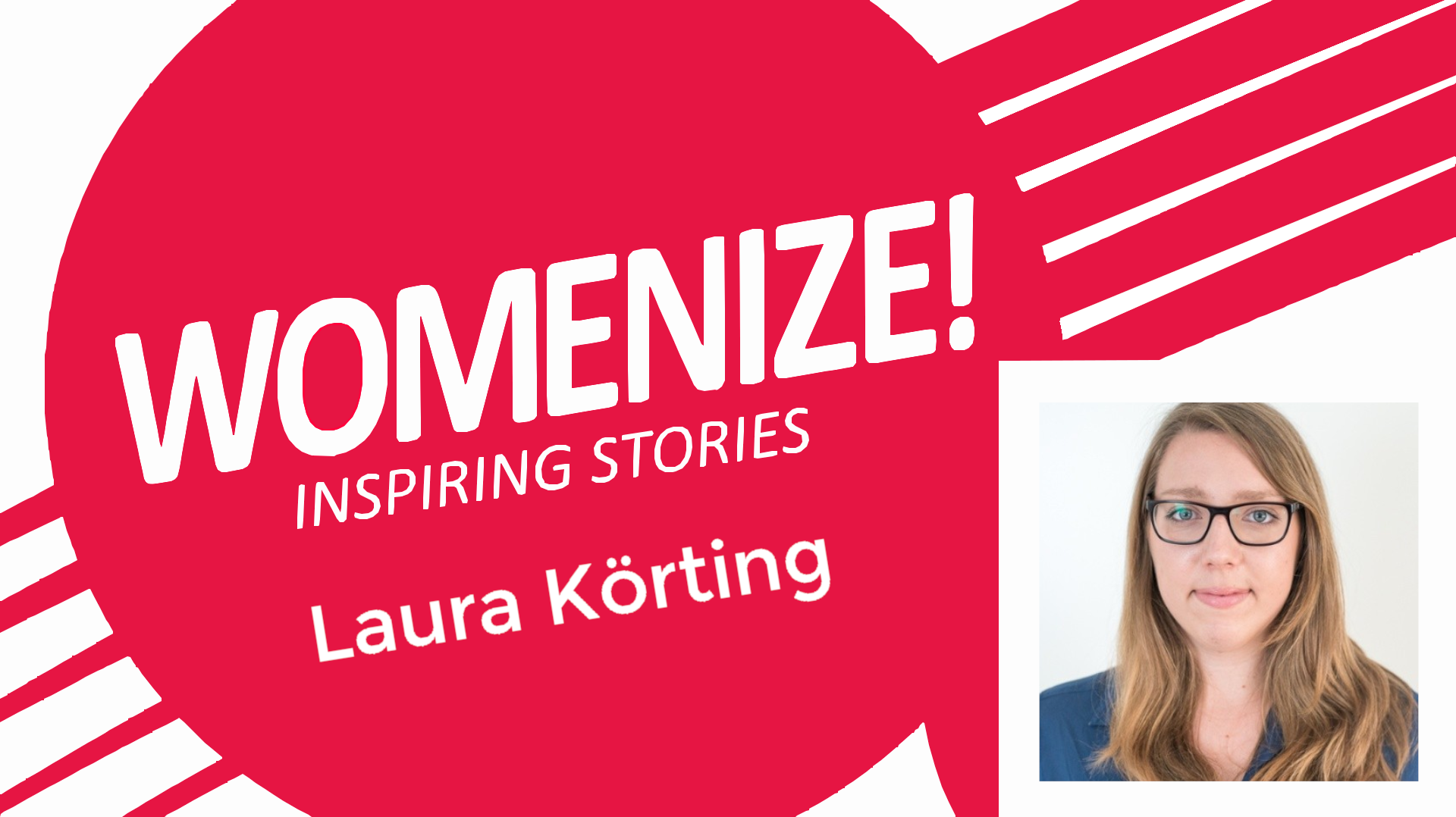
Laura Körting – Womenize! – Inspiring Stories
Womenize! – Inspiring Stories is our weekly series featuring inspirational individuals from games and tech. For this edition, we talked to Laura Körting, Co-Founder and Producer at LAB132. She speaks about how taking the leap to co-found LAB132, leading a growing indie game studio, and learning through hands-on experience have shaped her career and why empowering her team is the most rewarding part of her job. Read more about Laura here:
Hi Laura! Nine years ago, you co-founded LAB132 and have since grown it into a successful game studio with around 30 projects. Looking back, what was the most important decision in your career, and how did it shape the path you’re on today?
It is crazy to think back and realize that it has been more than 9 years already – more than 10, in fact, if you count the time leading up to the actual notary appointment and back to the first semi-serious talks we had within the founding team when first coming up with this idea!
I have to very cheesily say that the most important decision was to go for it and simply start a company, and to do so as a team of four from the beginning. My co-founders and I had known each other for many years and have always complemented each other well, especially professionally, but also in other areas. So from the very beginning, we had expertise and interest in the technical, creative, as well as management/production areas needed to build a studio and to make games.
Back then, we probably had some wild ideas about what the future might look like, but I don’t think we actually imagined that we’d grow so steadily – now we’re a team of 12, most of whom have been with us for a long time – and that we’d be working on so many amazing projects and titles. We’ve always been doing things step by step, always discussing and agreeing on our next course of action together. First doing other paid jobs while really starting up our company and starting our first own game. Then, one step after the other, building up a second, more stable pillar of our business through contract work – to be honest, through luck and chance and very kind people along the way. That background and approach has massively shaped my path, and our path, until today.
As Managing Director of LAB132, you wear many hats from business development and project management to working with clients and partners. What does a typical workday look like for you, and what part of your job do you enjoy the most?
Oh, very interesting question. Yes, I kind of have several jobs all stuffed together into one – as a lot of people in the indie game sphere do, because there’s so much to do, but only a very limited amount of people to do it. Actually, all my co-founders are also managing directors of LAB132 – I kind of view us as a managing board team, where each person has different main responsibilities and we’re all very involved in actual projects in parallel. And I happen to be the person taking over most of the business- and management-related aspects, thus getting to call myself CEO to the outside. Technically there are always 3 main questions guiding my work: Is the studio doing alright? Is the team doing alright? And are the projects doing alright? They are all of course connected to each other, but they encapsulate pretty well what I actually do each week – project acquisition, contracts, securing and managing funding, personnel and budget planning, full project management of own games and partially client projects, (co-)leading the studio as well as the team, HR, controlling, and more.
What I enjoy most about my job is very easy for me to answer – enabling the team to build something and watching them do so! I can’t code well, I draw like a six-year-old, and I can’t come up with fun game systems. But what I think I am good at is supporting the people who can do all these cool things, help them organize their work, and bring them together. That’s what I love most about my job!
A typical workday is definitely full of meetings, lots of emails, Discord and Slack messaging, and either creating, re-writing, or reviewing any kind of document, haha. Most of the time I need to be flexible and jump between topics, too. There aren’t many days where I focus on just one or two things. Most of the times it’s team and project meetings of different kinds to share information, stay up-to-date and distribute tasks and responsibilities, then probably working on one or seeveral project proposals, reports, or other documents, paying bills and sending out invoices, maybe preparing for an upcoming event (of which there is always at least one somehow).
You studied Media Computer Science before gaining experience in research, teaching, and entrepreneurship. What is the most valuable lesson from your education, and what advice would you give to students who want to build a career in the games industry?
Yes, I got both my bachelor’s degree and master’s degree from Stuttgart Media University and loved it there. I come from a family of computer scientists and just went along with it when finishing school, but thought the “media” side would give it a nice twist. While I always liked video games, it was only during my studies that I discovered making games is a job and that it could be a fun one for me!
The questions are a bit hard to answer, because, although learning of course always continues throughout life, my official education has been over since 2017. Games are such a fast-paced industry, things seem to be always changing and evolving, and a truth that has been accepted at one point may not be valid anymore just a few months or a year later. So I think people entering the industry 20 or 30 years ago had a totally different approach and experience than me, who entered a bit over 10 years ago, which is again different compared to someone just now starting e.g. a university course related to game development or trying to get a first internship.
As described, I really enjoyed my time in Stuttgart at university and like to believe that I learned a lot of valuable lessons during my studies and my beginnings in the industry. I dipped my toes into different areas of game development, did internships to find out what I like to do and what I don’t. What really helped me were two things, I’d say.
First, practical experience. Trying things yourself and not just reading about it in theory. That’s probably something a lot of people would give as advice when making games, but hey, it’s true. You can have as many books as you want about game design, project management, or whatever. What you need to do is try it out, write down a game design document, actually code, actually try planning out a whole game project from concept to release, and then experiencing lots of ups and downs when your plans change dozens of times. That’s what I enjoyed so much during my studies, because we were encouraged to gain real experience in creating games, no matter if the output was cool and fun or if it sucked. I think a lot of game development studies or courses do it like that, which I think is the right way.
And second, to me it was important to have people around supporting me, sharing experiences, but also giving realistic advice. That can be family and partners, of course, but it can also be close, almost friend-like contacts within the industry, a university professor, or some other kind of mentor. That’s probably what I’d recommend to people starting in the industry, as well. It’s both fun and important to surround yourself with inspiring people, especially in the long-term.
Thanks for this interview, Laura!
Laura’s links: LinkedIn